
Hockey’s Best Return to the World Stage: The NHL and the Olympic Ice
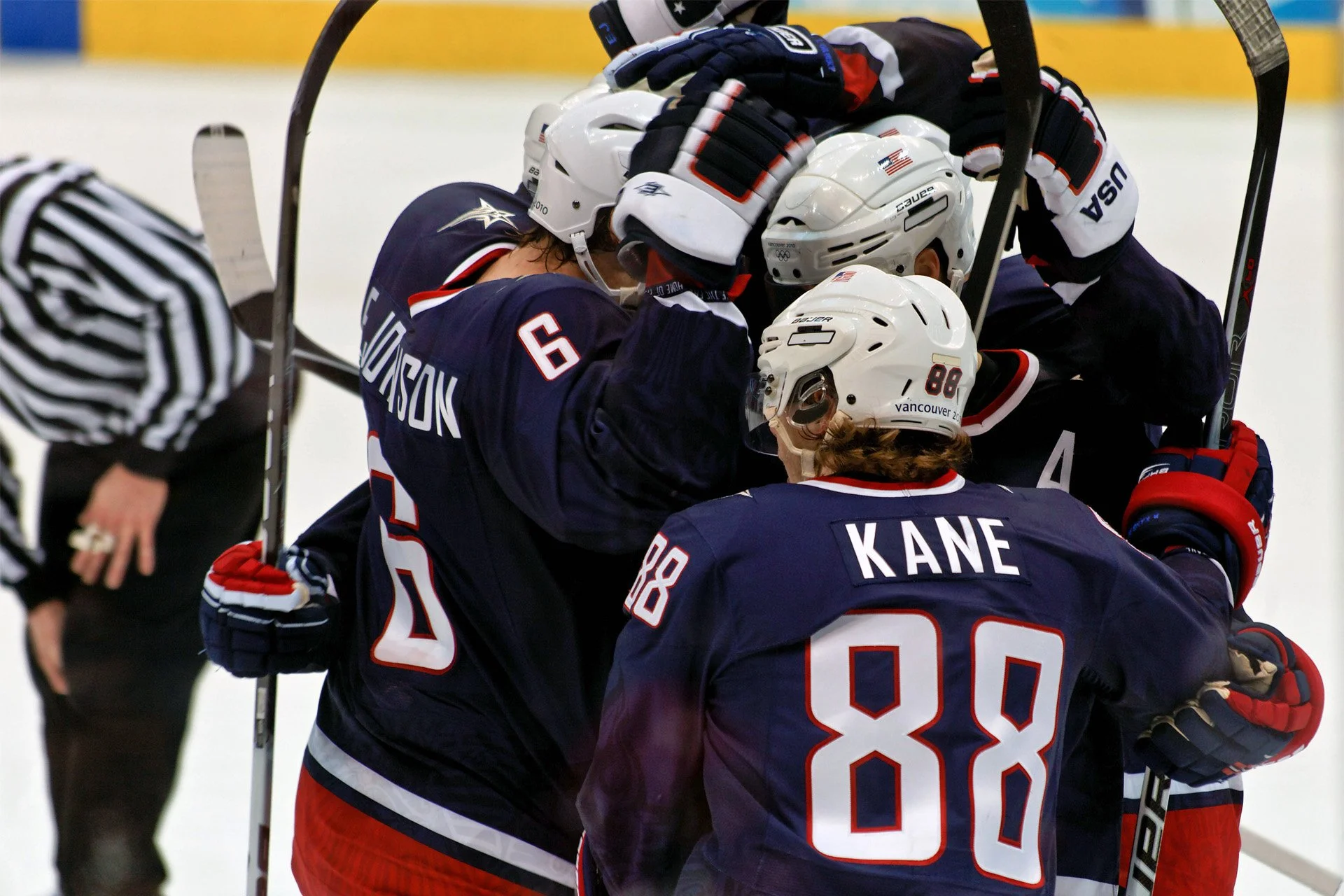
Patrick Kane and Erik Johnson celebrate a goal by Ryan Kesler in the men’s gold medal game at the 2010 Winter Olympics. Photo credits: s.yume
Written by Gina Anton
For the first time in 12 years, the world’s best hockey players will once again take the Olympic ice. When the puck drops at the 2026 Winter Olympics in Milano-Cortina, NHL players will officially return to the Games, ending a long and frustrating absence that began after the 2014 Sochi Olympics.
It’s a move that restores Olympic hockey to its highest level and one that echoes the sport’s most iconic moment: the 1980 “Miracle on Ice” at Lake Placid.
Why NHL Players Were Gone
The NHL’s absence from the Olympics was never about a lack of interest from players or fans. Instead, it came down to logistics, money, and control.
The league opted out of the 2018 PyeongChang and 2022 Beijing Games due to concerns over:
A midseason shutdown that disrupted the NHL calendar
Injury risk without adequate insurance coverage
Travel and fatigue, especially for teams with multiple international stars
Limited marketing and broadcast rights for the NHL itself
Owners were hesitant to pause a season that generates billions in revenue, while the league felt it received little benefit from the Olympics compared to events it controls, such as the Stanley Cup Playoffs.
As a result, Olympic tournaments were played without NHL stars, relying on European pros, minor-league players, and former NHL veterans. While hockey remained competitive, it lacked the sport’s biggest names.
Why the NHL’s Return Matters
Hockey is at its best when the world’s best play for their countries. The return of NHL players instantly elevates the Olympics from a strong international tournament to a true global showcase.
For fans, it means: Connor McDavid in a Canada jersey, Auston Matthews leading Team USA, David Pastrňák in a Czech jersey, and other superstars competing on the same stage
For players, it fulfills a dream. Many NHL stars grew up watching Olympic heroes and have spoken openly about how representing their country rivals winning the Stanley Cup in emotional significance. The Olympics reach audiences far beyond traditional NHL markets, exposing the game to casual viewers and new fans worldwide.
Why This Is Good for Hockey
The NHL’s return strengthens hockey in three major ways:
1. Global Growth
Olympic exposure accelerates the sport’s international development, particularly in non-traditional markets. Young players watching the Olympics today could become future pros.
2. International Rivalries
Nothing matches the intensity of national pride. USA vs. Canada, Sweden vs. Finland, and North America vs. Europe all gain renewed energy when NHL stars are involved.
3. Legacy Moments
The Olympics create moments that transcend leagues and generations where moments are remembered for decades.
Lake Placid
A Modern Echo of the Miracle on Ice
The 1980 U.S. victory over the Soviet Union remains the most famous moment in hockey history. A team of American college players defeating a dominant Soviet squad wasn’t just a sports upset but a cultural milestone during the Cold War.
Ironically, that miracle happened without NHL players. At the time, professionals were not allowed to compete, and the Soviets benefited from a system that blurred the line between amateur and pro.
Today, the situation is reversed.
Modern Olympic hockey thrives when the world’s top professionals compete openly and equally. The return of NHL players doesn’t diminish the Miracle on Ice, it honors it by showing how far the sport has come.
The NHL’s return to the Winter Olympics is long overdue worth it. It restores credibility to Olympic hockey, gives fans the matchups they crave, and allows players to chase a dream that transcends contracts and club loyalties.
