
Ovechkin’s Final Season: A Legacy Beyond the Ice
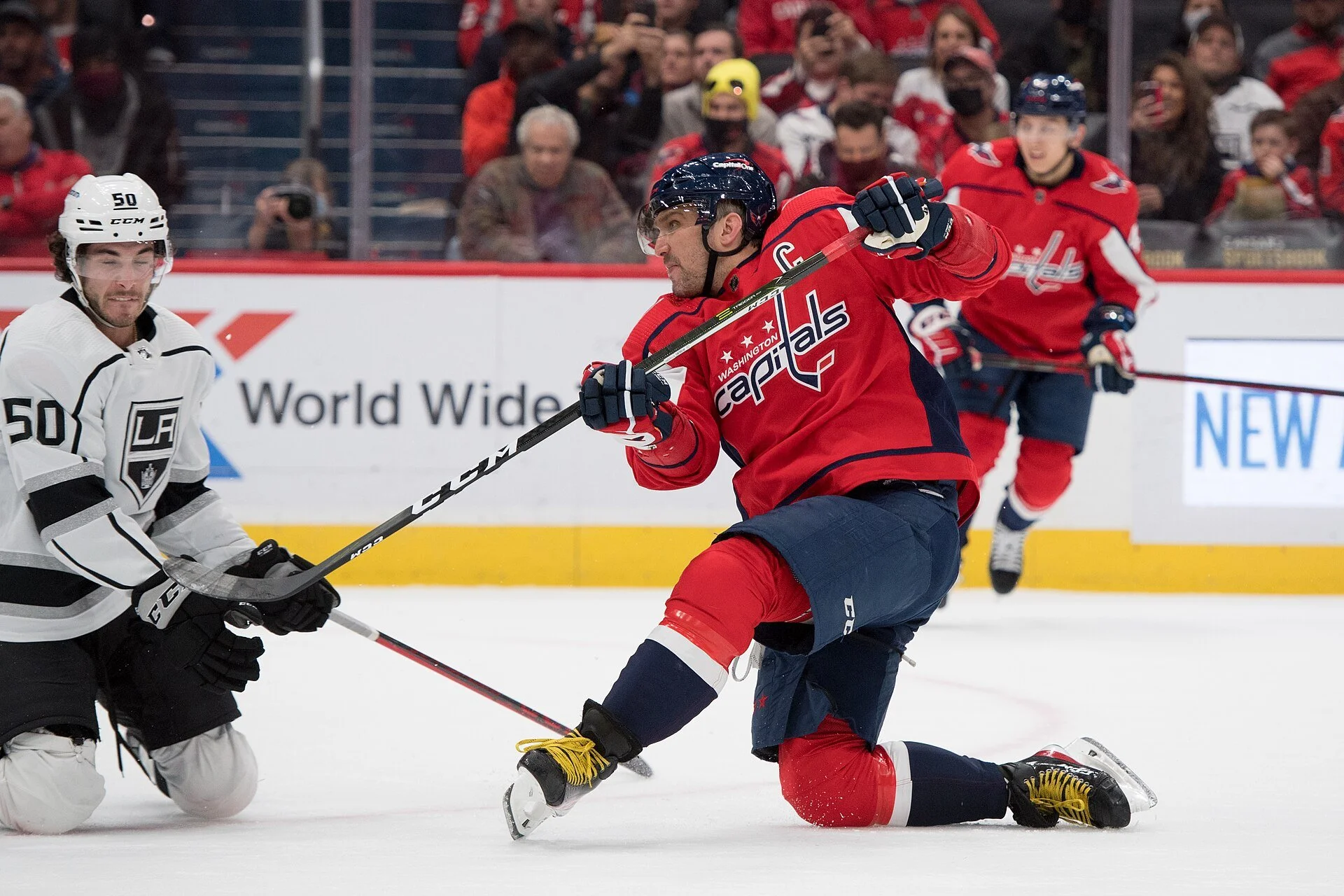
Washington Capitals forward Alex Ovechkin shoots from one knee during a matchup against the Los Angeles Kings on December 19, 2021. Photo by Billy Sabatini/All-Pro Reels.
Written by Maria Kaczmarek
Alex Ovechkin’s final season with the Washington Capitals is about more than saying goodbye to one of hockey’s greatest players. It is also an opportunity for the franchise to pursue another championship while preparing for a future without the captain who has defined it for more than two decades.
When Ovechkin announced on October 5 that the 2026-27 season would be his last in the NHL, he made it clear that his focus remained on the team. After 21 seasons in Washington, including the franchise’s first Stanley Cup championship in 2018, he has one more opportunity to help the Capitals compete for another title.
“I am excited about this season with my teammates, and we will do everything we can to make this year special,” Ovechkin said in his retirement announcement.
That goal carries added significance after Washington missed the playoffs last season, despite Ovechkin leading the team with 32 goals and 64 points. The Capitals responded with an aggressive offseason, adding forwards Alex Tuch, Jordan Kyrou and Boone Jenner to strengthen their roster.
“Our goal is to obviously compete for a Stanley Cup and give Ovi the best chance to have one more,” forward Dylan Strome told NHL.com.
The expectation is not simply to give Ovechkin a memorable farewell. Washington wants to return to championship contention, and its captain remains determined to help make that happen.
As Ovechkin enters his 22nd season, however, his role may continue to evolve. Coach Spencer Carbery has discussed managing his minutes and deployment as the Capitals integrate their new additions. Although Ovechkin remains a major offensive presence, his influence extends beyond the goals he scores.
That influence is already visible among the next generation of Capitals players. When Ryan Leonard joined Washington after his sophomore season at Boston College, Ovechkin and veteran defenseman John Carlson welcomed him to the team, taking him to dinner and encouraging him to take the traditional rookie lap before his NHL debut.
“Just play your game. Don't try too much,” Ovechkin advised the rookie. Leonard described Ovechkin to The Washington Post as “a guy you look up to your whole life.”
For Ovechkin, helping younger teammates is also a way of passing on the support he received when he first arrived in Washington. In 2023, he spoke to NHL.com about helping rookie Ivan Miroshnichenko adjust to the league.
“I was in the same position when the boys helped me out my first year and I will never forget,” Ovechkin said. “And I hope when they're going be old and young guys are going to come here, they're going to help them out as well.”
That exchange between generations reflects how Ovechkin’s leadership could outlast his playing career. Washington will not find another player who can simply take his place, but younger teammates can carry forward the standards and culture he has helped establish.
His impact also reaches beyond the locker room. Ovechkin’s time in Washington has connected generations of fans to the franchise and helped raise hockey’s profile in the area. His legacy extends beyond his records and the 2018 championship to include the relationships he has built and the influence he has had on those around him.
Preparing for life after Ovechkin will require the Capitals to build on that foundation rather than search for another version of No. 8. The next generation must develop its own leaders as the organization works to maintain the competitiveness and accountability that have defined Ovechkin’s tenure.
While the Capitals cannot know exactly what the team will look like without their captain, they can control how they approach this final season: competing for a championship, learning from Ovechkin and building toward what comes next.
Ovechkin will eventually skate his final lap as a Capital, but his legacy will extend beyond his records and the way his career ends. The true measure of his final season may be what Washington carries forward after its defining player is gone.
