
Inside the Strategy Behind the PWHL’s New Conference Format
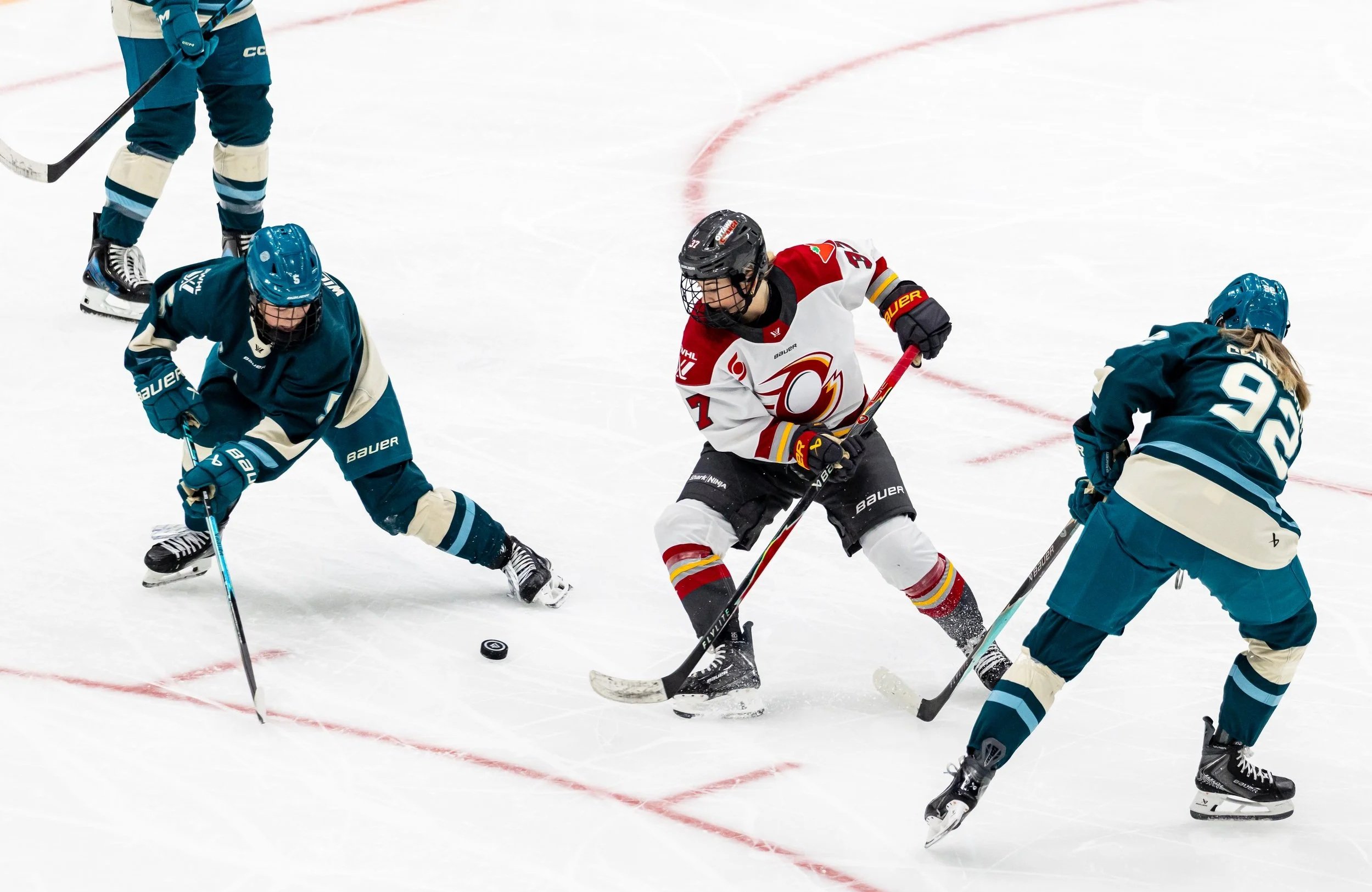
Ottawa Charge and Seattle Torrent battle for the puck during a PWHL matchup at Climate Pledge Arena on December 17, 2025. Photo by Jenn G.
Written by Izabela Gage
For the first three seasons of the PWHL, every team competed in one league-wide standings race. This season, the road to the Walter Cup will look different.
With 12 teams entering the 2026-27 season, the PWHL is introducing two six-team conferences and expanding its postseason from four teams to eight. While these changes create more opportunities for teams to compete for a championship, they could also influence how coaches prepare for opponents, manage their players, and approach the playoffs.
Each team will play 30 regular-season games, including 18 against conference opponents and 12 against teams from the opposite conference.
“The introduction of conferences and an expanded playoff format will deepen rivalries and fuel the competitiveness that makes PWHL action so exciting from the very first puck drop until the Walter Cup is raised,” executive vice president of hockey operations Jayna Hefford said in the league’s October 2 schedule announcement.
Those rivalries could extend beyond the standings. Facing conference opponents more frequently gives coaching staffs additional opportunities to study opposing systems and make adjustments throughout the season.
For example, a team struggling against an opponent’s forecheck in December could adjust its breakout strategy before their next meeting. Repeated matchups could also make special teams increasingly important as coaches become more familiar with opposing power-play formations.
Under the new format, success may depend not only on how well teams execute their systems but also on how effectively coaches respond to their opponents’ adjustments.
“We highlight the strengths of the other team and tell our players how we’re going to defend that,” Montréal head coach Kori Cheverie told the PWHL ahead of an April 2025 matchup against New York in a pregame interview.
Cheverie’s approach highlights the importance of opponent-specific preparation, which could become even more relevant as conference teams face each other more frequently.
However, preparing for familiar opponents is only one challenge. Geographical differences between the conferences could also influence how coaches manage their players throughout the season.
The Eastern Conference is relatively concentrated, with Boston, New York, Montréal, Ottawa, Toronto, and Hamilton. Meanwhile, the Western Conference stretches from Vancouver and Seattle to San Jose, Las Vegas, Minnesota, and Detroit. Those distances could make travel and recovery particularly important for Western Conference teams.
Longer trips and time zone changes may affect how coaches structure practices and manage ice time. Teams facing demanding travel stretches may need to prioritize recovery rather than maintain the same practice intensity throughout the season.
The challenge, however, is not exclusive to the West.
“We’ll be tested early with so much time on the road, but that’s an opportunity for us to come together, establish who we are, and earn our position,” Ottawa Charge head coach Carla MacLeod said in the team’s 2026-27 schedule announcement.
Managing those demands could become even more important as teams compete for postseason positioning, particularly with an additional playoff round awaiting them.
Previously, four teams qualified for the Walter Cup Playoffs, competing in two best-of-five rounds. This season, the top four teams from each conference will qualify, beginning with best-of-three quarterfinals before advancing to best-of-five conference finals and the Walter Cup Final.
The shorter opening round presents a different challenge. In a best-of-three series, losing the first game immediately puts a team one defeat away from elimination. Coaches will have less time to experiment with line combinations, defensive matchups, or special teams before their season is on the line.
The first-place team in each conference will also select its quarterfinal opponent from the third- and fourth-place finishers, adding another tactical decision. Previous performances and opposing playing styles could influence those selections.
Reaching the playoffs and advancing through them will require different approaches. Coaches will have to balance the importance of conference matchups with the demands of a longer postseason, all while preparing for opponents who have had just as many opportunities to study their systems.
As the PWHL enters its fourth season, the conference shift represents more than a change to the standings. From adjustments made during repeated regular-season matchups to decisions that could determine a team’s playoff fate, the new format introduces another layer of strategy across the league.
The race for the Walter Cup will no longer be just about which teams separate themselves over 30 games, but also which ones can best manage familiarity, preparation, and postseason pressure.
