
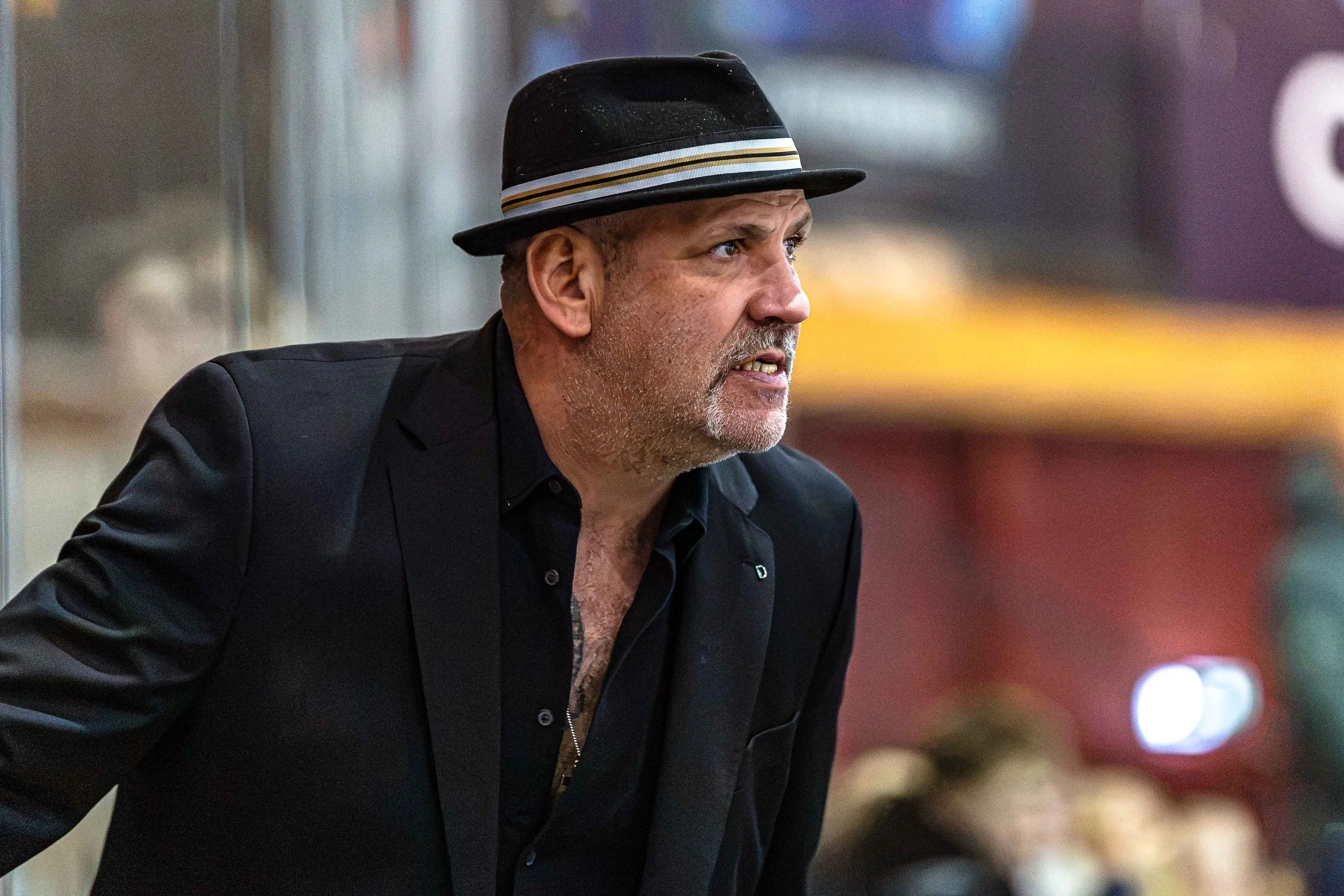
Zoetermeer Panthers head coach Paul Vincent during a matchup against GIJS Marne Groningen at SilverDome on November 6, 2026. Photo by Dennis Jouvenaar of Jouve Fotografie.
Written by Gina Anton
ZOETERMEER, Netherlands — After a disappointing loss to Tilburg last weekend, Paul Vincent wanted his team to do something simple: move on.
The Zoetermeer Panthers did exactly that Friday night.
Zoetermeer defeated GIJS Marne Groningen 4-2 at SilverDome, responding to last weekend’s setback with a gritty performance that reflected many of the qualities Vincent has demanded since taking over behind the bench.
“[Last weekend] was a disappointing loss,” Vincent said in an interview with BTI. “The key was to put it behind you, and focus on the task at hand.”
Zoetermeer set the tone early. Levi Juntunen opened the scoring just 1:01 into the game, giving the Panters an early lead before Groningen answered in the second period. Vincent’s team regained control through goals from Zach Trempner and Dominykas Bisturys before Trempner sealed the night with an empty-net goal at 59:06.
The game was not without adversity. Groningen tied the game at 2-2 early in the third period, but Zoetermeer answered less than a minute later. It was the type of game Vincent believes his team needs as it prepares for the more demanding stretch of the season.
“It’s gritty games like today that are going to prepare us for two weeks from now,” Vincent said.
However, the result was only part of the equation. Since arriving in Zoetermeer, Vincent has focused on changing the standards surrounding the team, not simply how it plays, but how its players prepare, compete and approach their roles.
A Different Standard
Vincent did not walk into Zoetermeer expecting to make small adjustments.
He wanted to establish a different culture.
“I think we started off slow and progressed and got better,” Vincent said. “We had to break a lot of old habits and they were not ready for someone like myself who came and has such a demand for perfection.”
That demand has translated into a practice environment built around competition.
Vincent emphasizes “a lot of down low work, a lot of 1 on 1 battles” and competition drills designed to replicate the intensity players will face in games.
The expectation is not simply to participate. Players are expected to earn their opportunities.
“I only play the guys that show up and are ready to go,” Vincent said.
Captain Joy Turpijn, who spoke with BTI after the game, has noticed the difference.
After playing in Zoetermeer since 2009, Turpijn has experienced several different coaching environments. He said Vincent’s emphasis on preparation and accountability has already changed the way players approach their work.
“I see guys working out more, I see guys on the ice pressuring more,” Turpijn said.
For Turpijn, the consistency Vincent demands is not limited to game nights.
“It’s really helpful to have a coach who says on and off the ice we need to be consistent,” he said.
That consistency is central to Vincent’s philosophy.
“Consistency comes down to the inner being I believe,” Vincent said. “You learn to have it.”
He also believes players perform better when they understand exactly what is expected of them.
“Not everybody is the same, not everybody’s role is the same, and you have to take pride in the role that I give you and make sure you have consistency.”
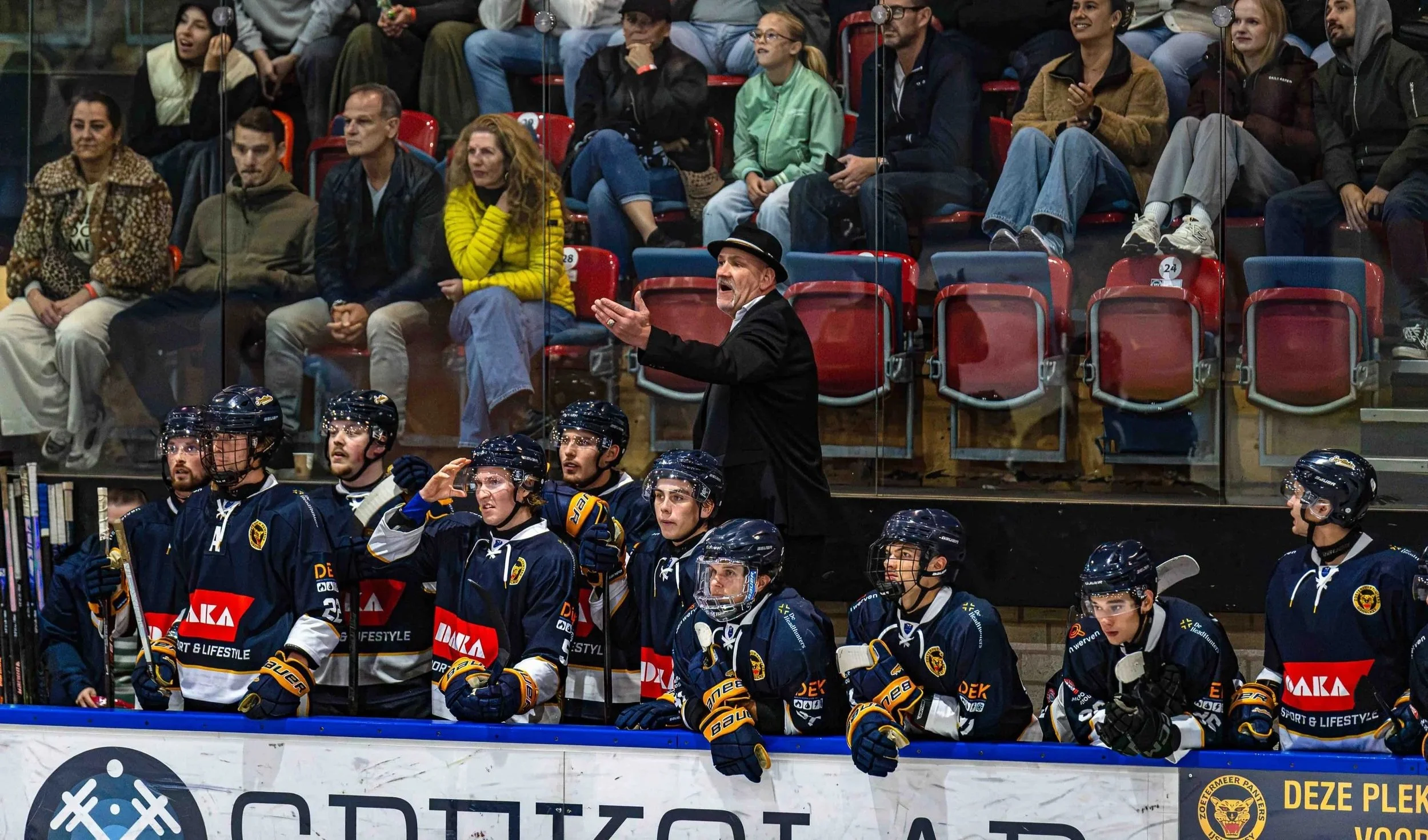
Zoetermeer Panthers head coach Paul Vincent during a matchup against Hijs Hokij. Photo by Dennis Jouvenaar of Jouve Fotografie.
When Tough Coaching Creates Trust
Vincent’s approach can be demanding, but he does not view demanding coaching and player relationships as opposites.
In fact, he sees the relationship between coach and player as the foundation of everything else.
“I believe I’m a players coach,” Vincent said. “The most important thing is to have a relationship with them.”
That philosophy is evident in the way his players describe him.
Nátán Vertes, who also spoke with BTI, said he responds well to Vincent’s expectations because they push him toward the type of player he wants to be.
“I love Paul,” Vertes said. “I grew up with a hard coach. An older guy who was really hard on us and hard on me and I feel like I am playing my best game when he is hard on me.”
For Vertes, Vincent’s demanding nature has not created distance. It has created trust.
“He is a good guy and he is kind and off the ice you can talk to him about everything but he’s also really hard and expecting a lot on the ice so I think he is getting the best out of me which I think is a good coach to have.”
That relationship is exactly what Vincent believes allows his players to respond to his demands.
“If they can come up to me and trust me and I want the best for them then they’re going to do so much more for me,” Vincent said. “People don’t really understand that.”
Vertes appears to be one example of that philosophy working.
“I like that he is expecting a lot from me, I like a challenge,” Vertes said. “I like pressure and hard situations.”
The forward also pointed to the trust Vincent has placed in him during games, whether Zoetermeer is protecting a lead or trying to come back.
That trust is not accidental. Vincent wants his players to understand that responsibility comes with their roles. When players accept those roles, he believes the team becomes stronger as a whole.
Building More Than a Current Roster
Vincent’s vision extends beyond the current Eredivisie season.
One of his priorities when arriving in Zoetermeer was finding a younger core that could eventually become part of the club’s future.
“My job this year was to find a younger core, because we do have an older team,” Vincent said.
The club added five or six players to its U23 team, giving younger players an opportunity to compete while also creating additional competition within the senior group.
For Vincent, the goal is not simply to give young players ice time. It is to give them responsibility.
“When you play with the U23 and give them those opportunities then they’re leaders,” he said.
That can mean learning how to play on the power play, kill penalties, carry a team and eventually move into larger roles.
Turpijn has seen the impact from the other side of the equation. He said the younger players brought in by Vincent are willing to listen and learn while also benefiting from playing alongside experienced players.
“The younger guys when I tell them something they accept it,” Turpijn said.
That relationship between the older and younger players could become one of the most important parts of Vincent’s long-term vision for Zoetermeer.
He is not simply trying to build a team capable of competing this season. He is trying to create a pathway for the players who could eventually become the next generation of the club.
A Standard Worth Building
Friday’s 4-2 win was not a perfect performance, and Vincent did not pretend it was. But that may be part of the point.
The game demanded that Zoetermeer respond after giving up the lead. It demanded physicality, discipline and continued effort. Most importantly, it gave Vincent another opportunity to see how his team responds when the game becomes uncomfortable.
That is the type of hockey he wants to build.
“To win a championship you have to be gritty,” Vincent said. “You win championships with how you prepare yourself in September, October, November, leading into the playoffs.”
For Vincent, the work toward that goal is already underway.
His methods are demanding. His expectations are high. But the response from his players suggests they are beginning to understand what he is asking from them.
Vertes summed up that relationship simply.
“I feel like he is getting the best out of me,” he said.
And if Vincent can continue getting the best out of his players while developing the next group behind them, Zoetermeer may be building something that extends well beyond one Friday night in November.
