
The Pressure We Don’t See: How the Weight of Expectations Can Follow NHL Players Beyond the Ice
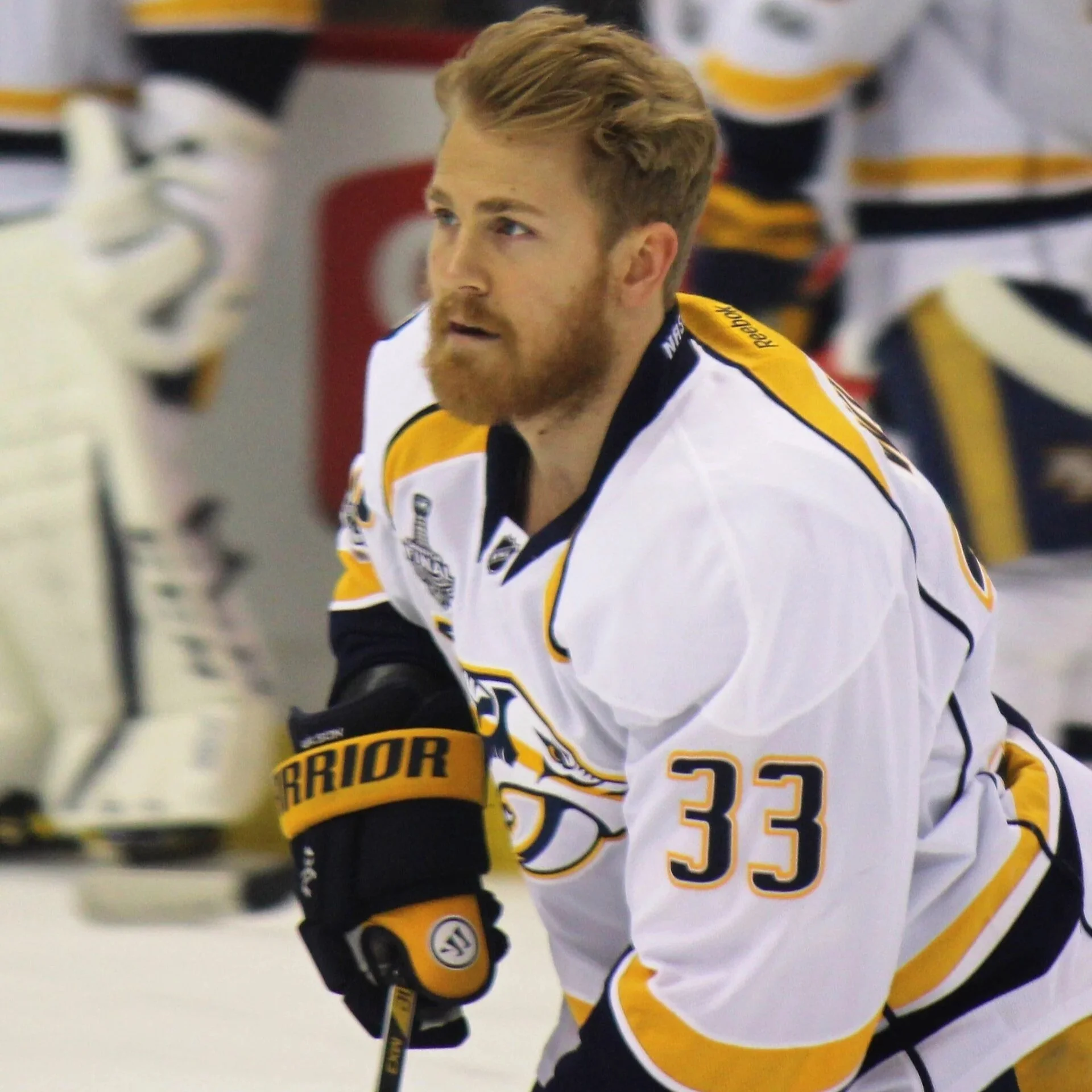
Nashville Predators forward Colin Wilson during Game 5 of the Stanley Cup Final against the Pittsburgh Penguins on June 8, 2017, at PPG Paints Arena in Pittsburgh, Pennsylvania. Photo by Michael Miller.
Written by Gina Anton
Hockey teaches players to embrace pressure. It is part of the game and, at the highest level, part of the job. Pressure means the moment matters, that teammates and coaches trust you, and that expectations come with being one of the players relied upon most. The ability to perform in those moments is often treated as one of the clearest signs of an elite athlete.
But performing under pressure and living with pressure are not necessarily the same thing.
Pressure takes different forms in hockey. For some players, it comes from the expectations surrounding their name, their team and their place in the sport. For others, it can be far more difficult to see.
For Connor McDavid, pressure has been part of the job long before he became the face of the Edmonton Oilers. He entered the NHL in 2015 carrying expectations that few players ever experience. The No. 1 pick was supposed to become a franchise-changing player, and eventually, the expectation became something even bigger: McDavid was supposed to lead Edmonton to a Stanley Cup.
Those expectations have followed him through every season, every playoff exit and every game in which the Oilers fall short. McDavid has spoken openly about the weight that comes with playing in Edmonton, particularly when every loss can feel larger than one game.
“When we lose a game, whether it's game one of 82 or game 3 of a playoff series, it's a big deal here,” McDavid said.
He has learned to welcome that pressure, but that does not mean it disappears. In discussing the challenge of maintaining perspective, McDavid admitted that he is still trying to figure out how to enjoy playing in an environment where so much is at stake.
“And so how do you have fun in an environment like that? I don't have that answer right now.”
That admission is impactful coming from a player who has spent much of his career at the center of the sport. McDavid has won scoring titles, collected individual awards and established himself as one of the best players of his generation. Yet even at that level, the expectations surrounding the game can make the game itself difficult to enjoy.
“Sometimes the regular season feels like a grind,” he said. “I think you've seen it in our play this year, in my play.”
And McDavid's experience is only one way pressure can show up.
Colin Wilson entered the NHL with a different set of expectations. Selected seventh overall by the Nashville Predators in 2008, Wilson had spent years working toward the same dream as countless young hockey players: reaching the NHL and proving he belonged there.
From the outside, he was living it.
Inside, he was struggling with obsessive-compulsive disorder that would affect much of his career.
In a 2020 essay for The Players’ Tribune, Wilson wrote about looking into the crowd during pregame skates and wondering what fans could actually see. They could see an NHL player preparing for a game. They could not see the cuts on his hands, the blood on his skate laces or the exhaustion that came from barely sleeping. They could not see how much effort went into hiding what he was experiencing.
“My OCD played a role in making me the player I was,” Wilson wrote.
For years, he played through it. He described spending much of his career in a constant state of fear and pressure, while an internal voice repeatedly told him he was not good enough and that he was not in control. The career he had worked toward did not protect him from those feelings. If anything, the demands of maintaining that career gave him more reasons to keep them hidden.
What Wilson carried never showed up in the box score.
That is where his story and McDavid's begin to intersect, even though their experiences were not the same. McDavid has described a pressure that is visible everywhere around him: the expectations of a franchise, a fan base and a sport that has spent years asking him to deliver. Wilson's struggle was much harder for anyone watching from the outside to recognize.
Both reveal how little the surface of a hockey career can tell us.
Hockey has long valued players who can absorb pressure without showing it. Toughness is often associated with getting back on the ice, playing through pain and staying composed when everything around you is unraveling. Those qualities can be essential to surviving at the highest level. But there is a difference between resilience and silence.
Players carry expectations from coaches, teammates, organizations, fans and, often, themselves. For a star, that pressure can become part of an identity. For someone struggling privately, it can become another reason to keep quiet.
McDavid's expressed that even a player who has embraced pressure can reach a point where the demands of winning begin to affect his relationship with the game itself. He later acknowledged that he was not always proud of how that pressure had affected him.
“I'm not always proud of that, but I want to be honest here,” he said.
Wilson's career followed a different path, but the same contradiction was there: an athlete could look successful while carrying something very different away from the rink.
After the 2017 Stanley Cup Final, Wilson reached a point where he knew he needed to address what he had spent years trying to manage on his own. He eventually sought professional help and began working toward a healthier relationship with himself and with the expectations he had carried throughout his career.
Years later, he wrote about the experience without separating the difficult parts of his life from the dream he had achieved.
“The human experience includes an incredible amount of suffering, even if you're living your dream.”
That reality is easy to lose in professional sports. A player scores, the team wins, the crowd celebrates and the story moves on. The next game arrives, followed by the next expectation. What happens away from the scoreboard rarely has the same visibility.
McDavid can look like the embodiment of everything an NHL player is supposed to be: talented, successful, competitive and capable of carrying an enormous burden for his team. Wilson looked like an NHL player who had reached the highest level of the sport. Neither image told the whole story.
The player on the ice is still carrying a life that the scoreboard cannot show.
Hockey will always ask its players to handle pressure. That is part of what makes the sport demanding and, at its best, compelling. But the ability to carry that pressure quietly should not be confused with the absence of a burden.
Sometimes the weight is obvious. Sometimes it is hidden.
And sometimes, the person carrying it is the only one who knows how heavy it has become.
