
As the PWHL Expands, So Do the Possibilities for Girls in Hockey
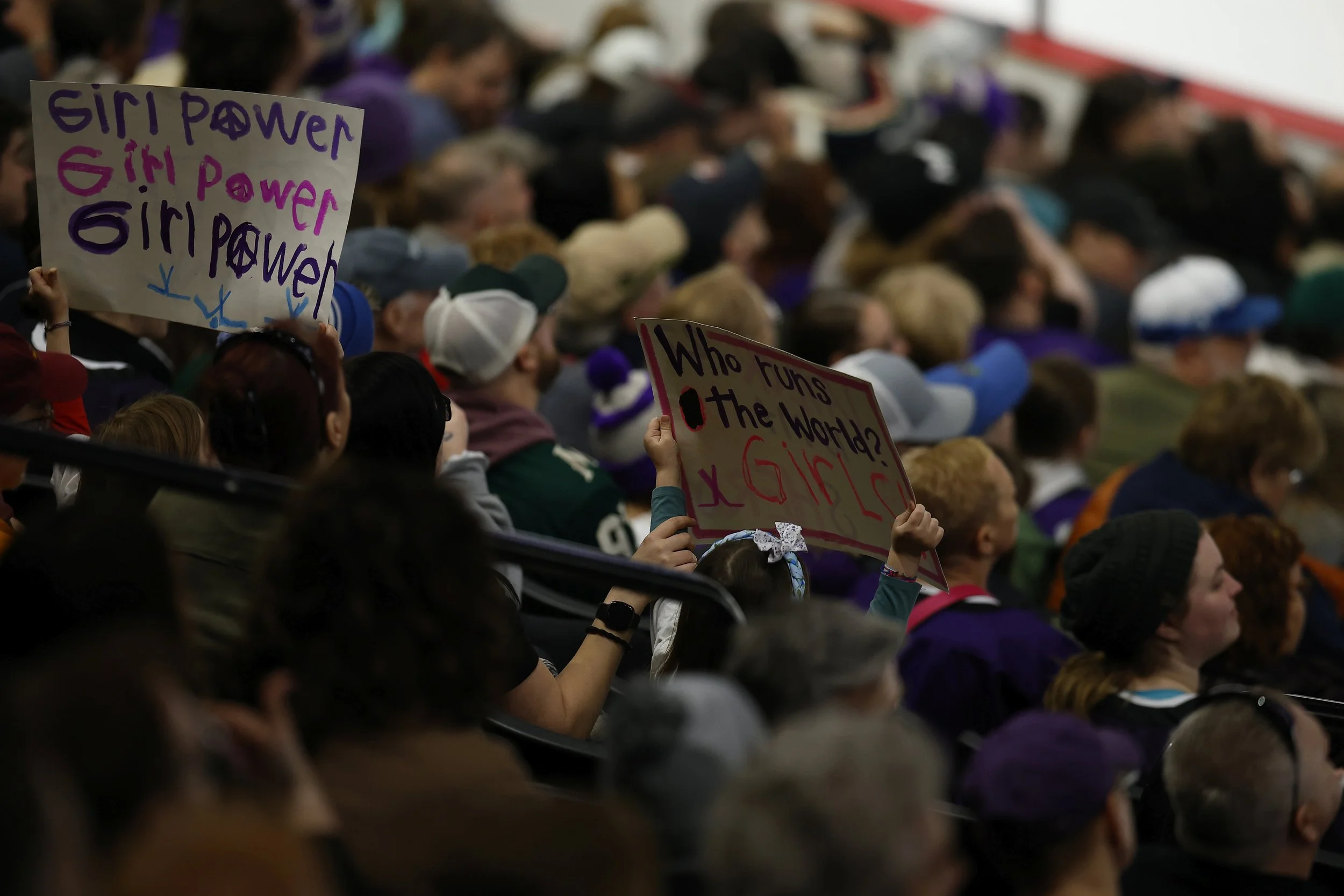
Minnesota vs Boston, on April 27th 2024 at Xcel Arena in St. Paul, Minnesota (photo credit John McClellan)
Written by Izabela Gage
For years, telling a young girl she could play professional hockey meant asking her to imagine a future that did not yet exist.
Now, she can watch it and work to be a part of it.
In its third season, the PWHL welcomed more than 1.1 million fans during the 2025-26 regular season, and will enter the 2026-27 season with 12 teams after adding Detroit, Hamilton, Las Vegas, and San Jose.
For players who grew up without a professional women’s league, that difference is difficult to miss.
Ottawa Charge captain Brianne Jenner, who is now signed to PWHL Hamilton, said in an interview with Team Canada, “I’m also just really excited for the next generation of players that this is their reality now. They’re not going to know any different. And that’s so wonderful.”
She added, “They’re going to grow up and see strong, confident women playing professional sports, and I think that’s great for their development as well.”
Jenner said, “You have all those youth hockey players there that are getting to see their dreams in front of them for the first time. But you also get so many different people, demographics coming out to the rink. You get a lot of older women who had that dream as well and played hockey, reffed, coached, and were part of what got our sport to where it is. They’re there celebrating together and enjoying that together.”
But the league’s growth is showing up beyond packed arenas. Across youth hockey, more girls are getting opportunities to play, meet professional athletes, and picture themselves continuing in the sport.
In an interview with the PWHL, Minnesota Frost defenseman Sophie Jaques said she didn’t initially understand the significance of becoming a role model, but that changed throughout her PWHL career.
“Now I see how many young girls look up to us and the impact we’re having on them. It’s really cool. That’s definitely a reason to keep playing – to inspire more girls to play the game of hockey and keep it growing,” Jaques said.
The connection between professional hockey and youth participation is already visible in markets where the PWHL has expanded.
In Seattle, for example, the Kraken reported that female hockey participation in Washington had grown 34% since the organization’s inaugural season. At the same time, its youth association had developed seven all-girls teams and an all-girls Learn-to-Play program.
The arrival of the PWHL gave those players another reason to stay engaged. When the league held a Takeover Tour, 945 girls under the age of 12 participated in a clinic alongside PWHL players and attended a meet-and-greet.
These opportunities matter because watching a professional game and meeting a professional player offer two different experiences. One shows a young player what is possible, while the other makes that possibility feel tangible.
PWHL forward Abby Roque said in an interview with the NHL that she has seen that firsthand through her work with Hockey in New Jersey, a program serving underserved youth.
Roque said, “I was just happy to sometimes be a part of it, when I can stop it and say ‘Hi’ to the kids. It's great for me too. I get to go there, and the kids are always so happy, and they really just love the sport.”
She added, “I think hockey has so much more room to grow. It’s obviously a predominantly white sport, and I think it's huge to make it accessible for everyone.”
The league is also investing in connections like Roque’s. During the 2025-26 season, the PWHL shared its youth and adult programming saw a 500% increase in demand. Its Ready, Set, Skate program introduced more than 500 new players to hockey, while girls’ hockey grants helped more than 700 girls with equipment, registration, and camp scholarships.
Those numbers do not automatically mean the PWHL has solved the barriers that keep girls from playing. Ice time, equipment costs, transportation, and access to competitive programs can still determine who gets to continue. But the professional game is increasingly being connected to the grassroots game instead of existing separately from it.
In Boston, programs at Warrior Ice Arena have become part of that local growth, giving girls opportunities to develop their skills while seeing women’s hockey as something they can actively participate in.
That may ultimately be the most important part of the PWHL’s expansion: whether girls can see a path from their first practice to the professional level and believe that path could belong to them.
