
The PWHL’s Challenge: Building a Fanbase Beyond the Rink
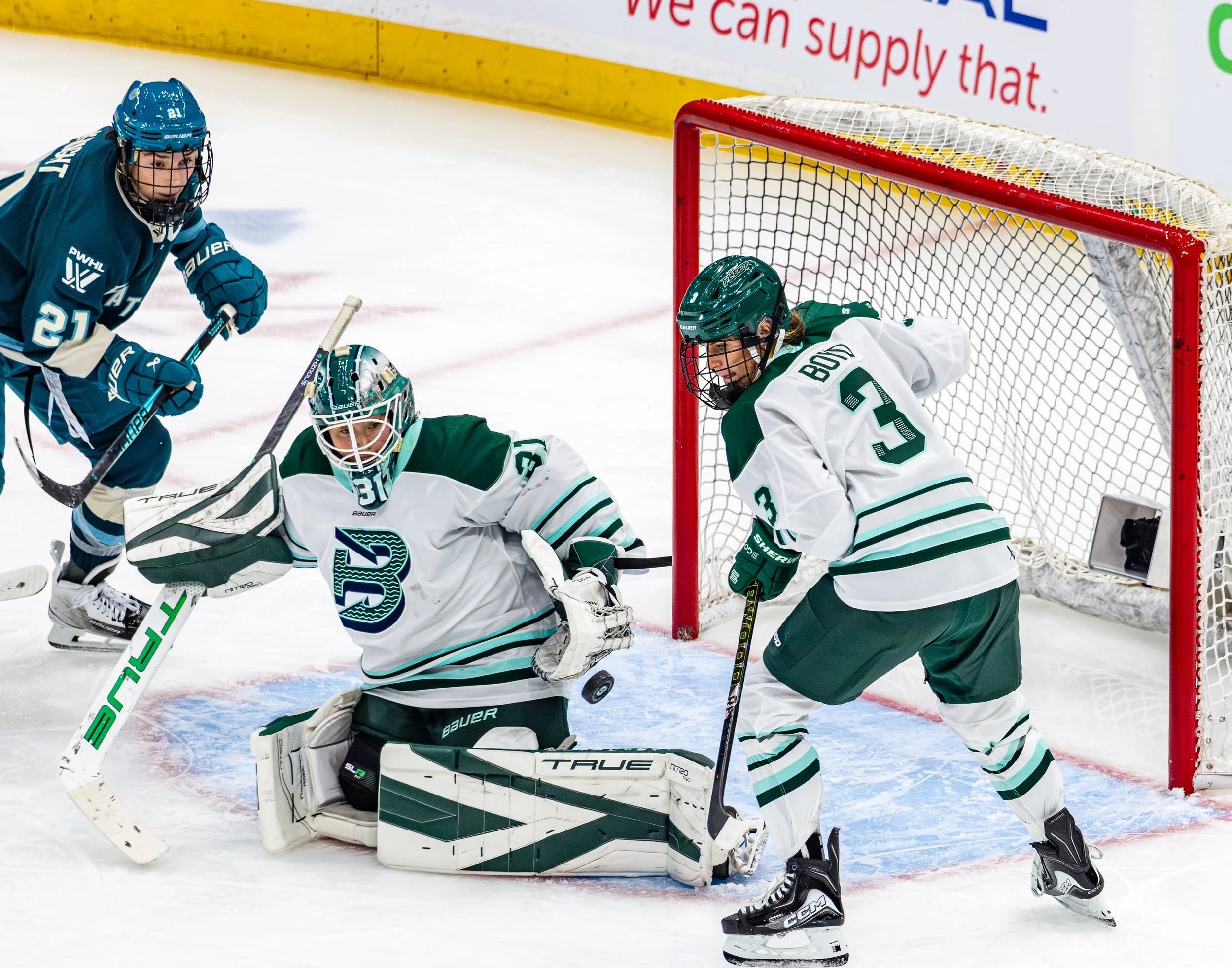
Seattle Torrent face the Boston Fleet during a matchup at Climate Pledge Arena on January 18, 2026. Photo by Jenn G.
Written by Maria Kaczmarek
The PWHL has already shown that fans will fill its arenas. Now, the challenge is giving them a reason to keep coming back.
In Ottawa, that connection has grown beyond what happens on the ice. Britt Hurley has been an Ottawa Charge season-ticket holder since the league’s inaugural season, but what keeps bringing her back is the community that has formed around the team.
“TD Place specifically becomes such a welcoming environment when you’re in the stands,” Hurley told Capital Current. “I think that’s the big impact the Charge has had, is the community that’s kind of come up around it.”
For Hurley, Charge games have become a gathering place for members of Ottawa’s queer community. She described the arena as a place where people can be themselves and feel comfortable in a professional sports environment.
That sense of belonging extends beyond one group of fans. It has become an important part of what distinguishes attending a PWHL game from simply watching hockey on television.
Ottawa has developed its own game-day traditions, many of which have come directly from the fans. One example is the kazoo tradition, which began among Ottawa supporters during the team’s second season in 2024 and eventually became part of the game-day atmosphere. At a 2026 game at Canadian Tire Centre, more than 17,000 fans filled the arena, dancing, cheering, playing kazoos, and holding signs for their favorite players, even as the Charge fell 3-0 to Montréal.
The crowd was impressive, but the atmosphere revealed something beyond attendance numbers. Fans were not simply watching the game. They were participating in the experience.
Payton Harrison, Ottawa’s manager of game production and fan experience, told Capital Current that many fans arrive alone and end up making friends at games. While the organization works to foster a sense of community, Harrison said much of that connection comes from the fans themselves.
That organic sense of belonging could be one of the PWHL’s biggest opportunities as the league continues to grow.
The league averaged 9,304 fans per game during the 2025-26 regular season, a 28 percent increase from the previous season and a 71 percent increase from its inaugural season. However, attendance only measures how many people enter an arena. It cannot capture how many leave feeling connected to the team or how many will return.
Boston is now facing its own test of that connection.
When nearly 18,000 fans filled TD Garden for the Fleet’s first game at the arena in April, Cayla Keenan was among them. A dedicated Fleet fan, Keenan has followed the team since its inception.
For Keenan, the night meant more than watching the Fleet play in one of Boston’s biggest sports venues.
“To quote those t-shirts that everyone is and should be wearing, ‘Everyone watches women's sports,’” Keenan told CBS Boston. “It is what it says. It says everyone watches them. If you put it here, they will come.”
Keenan’s excitement reflects the kind of connection the PWHL hopes to build: a league where fans do more than watch games and begin to see themselves as part of the team’s community.
That connection looks different for every fan. For some, it starts with a favorite player. For others, it develops through the atmosphere at games, friendships formed in the stands, or the experience of watching a young fan see professional women play hockey for the first time.
The Fleet are now working to turn that excitement into lasting support. Boston will make Agganis Arena its primary home in the 2026-27 season, after four of its six regular-season games there sold out last season. Full- and half-season memberships for the upcoming season have already sold out.
Those numbers show that fans are willing to invest in the team. But building a lasting fanbase requires more than selling tickets. It depends on what happens after fans walk through the doors.
Do they find a favorite player? Do they make friends in the stands? Do they bring their children back? Do they begin to see the Fleet as part of their identity as Boston sports fans?
For the PWHL, the challenge is turning that initial excitement into a lasting connection, giving fans reasons not only to attend games but to make the league part of their lives.
