
Women’s Hockey Sees Surge in Physical Play Amid Recent Games
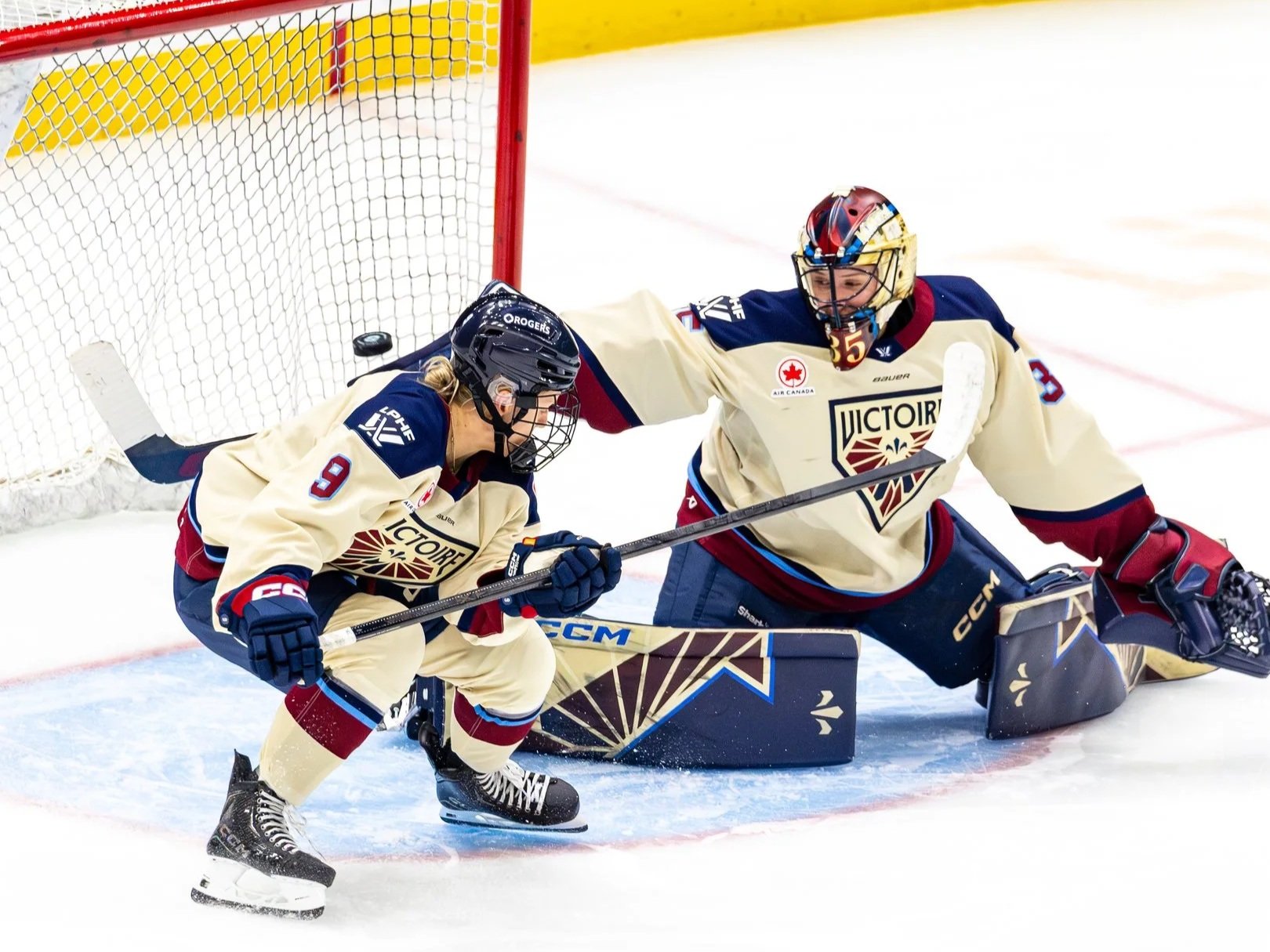
Kati Tabin and Ann-Renée Desbiens of the Montreal Victoire during a game against the Seattle Torrent on December 24, 2025. Photo credit: Jenn G.
Written By Ella Rose Licata
The Professional Women’s Hockey League has observed an increase in physicality that coincides with the growth of the sport. As the 2025–26 season continues, the gradual leniency of referee calls is beginning to bring the league’s penalty standards closer to those of other professional leagues.
Contact is a significant aspect of hockey and is commonplace within the sport. The National Hockey League is one example of a league renowned for its intensity and physical play.
As the PWHL garners a larger audience, the league is gradually moving toward a similar level of player-on-player engagement.
The PWHL is a young league, established in 2024, and its regulations continue to evolve. With player safety as the league’s top priority, the increase in physicality has developed cautiously.
Toronto Sceptres Head Coach Troy Ryan was asked about the development of contact and board play during their game against the Minnesota Frost.
“Minnesota is a really good team when they’re pressing down on you, pinching on breakouts. You’ve just got to be okay to protect the puck, surround the puck and embrace that a little bit,” Ryan said. “I thought that in the first part of the game we were letting them dictate that play, but as the game went on, we surrounded the puck, supported it well, and were comfortable stalling it a bit longer. It doesn’t always need to be a slow breakout, so I think they managed it much better as the game went on.”
Blocking shots and chasing the puck are integral parts of the game. As the PWHL grows, the pressure of athletic competition increases, encouraging players to perform more aggressively.
One key difference between the NHL and the PWHL lies in penalty enforcement and the degree of leniency shown by officials. Despite this, both leagues share many of the same foundational rules regarding physical contact and gameplay.
Fighting is one of the clearest distinctions between the two leagues. The NHL has historically allowed fights and altercations between players as long as both participants are able to continue. The PWHL, however, rarely allows fights in order to promote player safety on the ice.
Hockey includes a range of high-energy physical elements, such as checking, charging, boarding, and fighting. The application and severity of penalties related to contact are largely left to the discretion of the referee.
The PWHL Rulebook states: “The severity of the penalty, based upon the impact with the boards, shall be at the discretion of the Referee. There is an enormous amount of judgment involved in the application of this Rule by the Referees.”
The league is already beginning to see an increase in physical play and competitive intensity. Officials’ growing tolerance for contact has allowed athletes to demonstrate their abilities in ways that were less common earlier in the league’s development.
As the 2025–26 season continues, physicality in the PWHL will likely increase alongside the evolving standards of officiating.
